

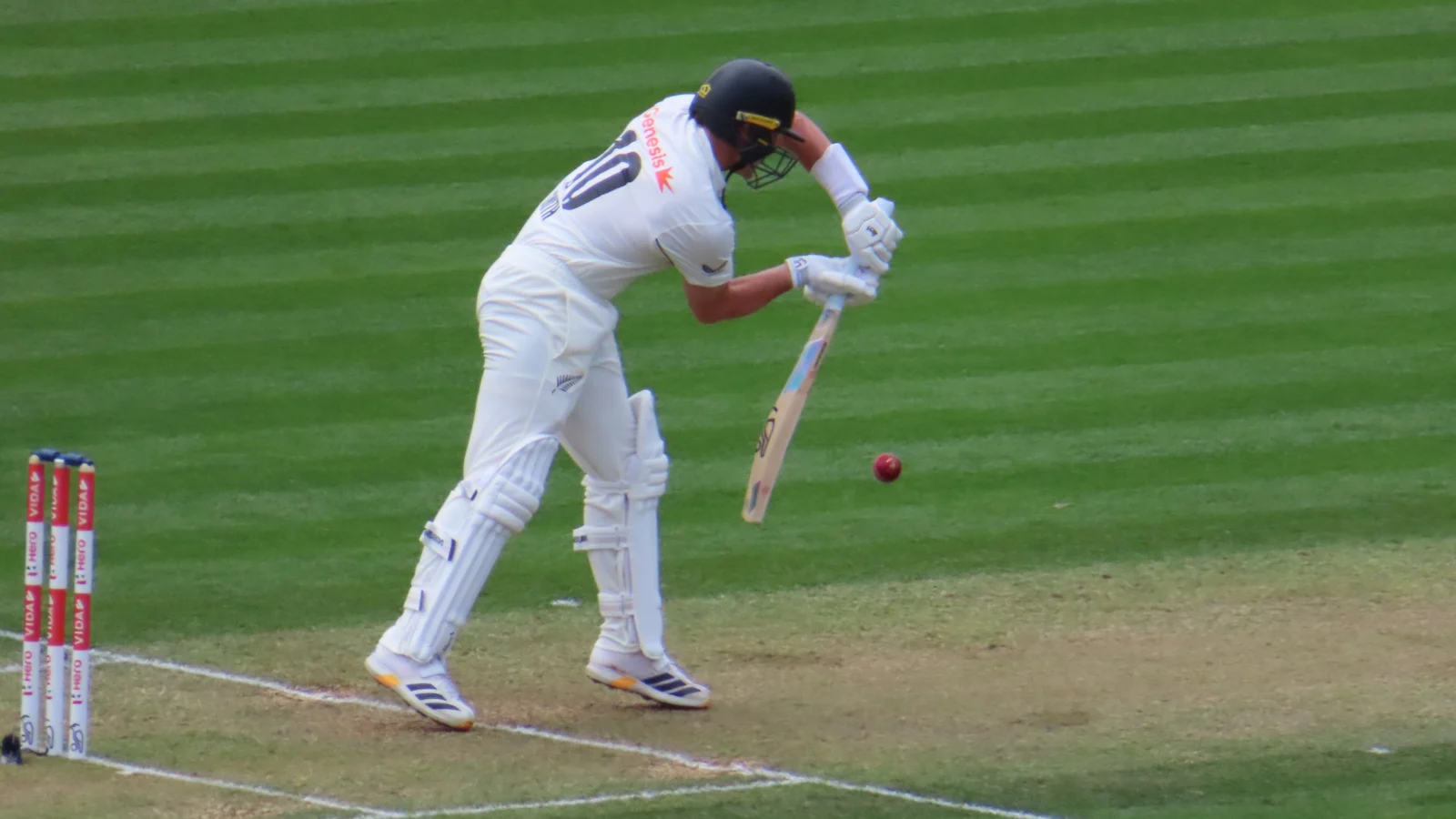
New Zealand batted through the final day at the Basin Reserve in Wellington on 23 November 2026 to draw the India vs New Zealand first Test, finishing their second innings on 239 for 5 from 120 overs. The India vs New Zealand Test draw came despite India declaring at 720 for 9, the highest Test total ever made in New Zealand, and holding a first-innings lead of 352 runs.
India began day five needing eight wickets and took three. Daryl Mitchell (49 not out off 186 balls) and Glenn Phillips (26 not out off 126 balls) then added an unbroken 63 for the sixth wicket from 258 balls, and the captains shook hands on a draw instead of playing the final hour. New Zealand finished 113 runs behind India’s total, so India never batted a second time.
India vs New Zealand match result: New Zealand save first Test
| Team | First innings | Second innings |
|---|---|---|
| New Zealand | 368 all out | 239/5 (120 overs) |
| India | 720/9 declared | Did not bat |
The India vs New Zealand match result leaves the two-match series level at 0-0, with the second and final Test to come at Hagley Oval in Christchurch from 27 November 2026.
India put New Zealand under pressure with record-breaking total
New Zealand were 70 for 5 on the first morning after Shubman Gill sent them in on a green pitch. Henry Nicholls and Phillips added 216 for the sixth wicket. Phillips made 118, his second Test century, and Nicholls was left unbeaten on 175 as New Zealand reached 368 on day two.
India replied with 720 for 9 declared on day four. KL Rahul scored 136 and Rishabh Pant 128, with Gill (98), Yashasvi Jaiswal (85), Devdutt Padikkal (80) and Dhruv Jurel (78) all past 75. The 352-run lead left New Zealand needing to bat for almost a day and a half to save the match.
How New Zealand fought back on days four and five
New Zealand’s second innings began badly. Captain Tom Latham was caught behind off Jasprit Bumrah from the second ball, completing a pair after he was bowled in the first over of the match. Nicholls made 31 before edging Prasidh Krishna to Jurel, and New Zealand closed day four on 119 for 2, still 233 behind.
Devon Conway extended his innings to 65 off 165 balls on the final morning before a thick inside edge off Washington Sundar carried to Pant. Rachin Ravindra followed for 37 off 129 balls, caught by Rahul near gully off Prasidh, leaving New Zealand 139 for 4. Tom Blundell helped take them to lunch on 157 for 4, but he fell for 15 soon after the break, caught behind off Anshul Kamboj after India reviewed. New Zealand were 176 for 5 in the 77th over, with well over half of the final day still to play.
The Mitchell and Phillips partnership that decided the Test
The Mitchell and Phillips partnership ran from the 77th over to the end of the match. Mitchell had made only 1 in the first innings, and India had already missed him twice on day five: a glove chance off Bumrah went down with New Zealand on 139 for 4, and Akash Deep fumbled a run-out chance at 170 for 4.
After that, neither batter gave India much. India took the second new ball in the 82nd over, and Phillips went 43 balls without scoring during the afternoon. At tea New Zealand were 206 for 5, with Mitchell on 24 off 107 balls and Phillips on 19 off 60. Mitchell then hit a four and a six early in the final session, the clearest sign that the danger had passed.
The value of the stand was time, not runs. The pair scored 63 runs from 258 balls, about 1.47 runs an over, and that slow rate was the point: every over they survived was one fewer for India to take five wickets. This New Zealand resilience against India was built twice in the same match, first from 70 for 5 on day one and then again on day five.
Phillips finished the Test with 144 runs from 342 balls across his two innings, unbeaten in the second.
Why India could not convert their dominance into victory
India’s position was strong but not decisive. They needed to take 10 wickets in New Zealand’s second innings and managed five, three of them on the final day. Bumrah, Kamboj, Akash Deep, Prasidh and Sundar shared the work, with Sundar the only specialist spinner after India left out Ravindra Jadeja and Mohammed Siraj.
The conditions also changed. The grassy surface that helped India’s seamers on the first morning eased as the Test went on, and New Zealand’s batters survived 120 overs in their second innings. India have not won a Test at the Basin Reserve since 1968.
What the draw means for the India vs New Zealand 2026 series
The draw means neither side leads the India vs New Zealand 2026 Test series, and India miss the chance to go 1-0 up. The series forms part of the 2025-27 World Test Championship, and everything now rests on the Christchurch Test from 27 November 2026.
India made the biggest total in Test cricket in New Zealand and still could not win, because Mitchell and Phillips used 258 balls to take the final day away from them. New Zealand go to Christchurch with the series level and two rearguards behind them in a single match.


Join the conversation
0 comments