

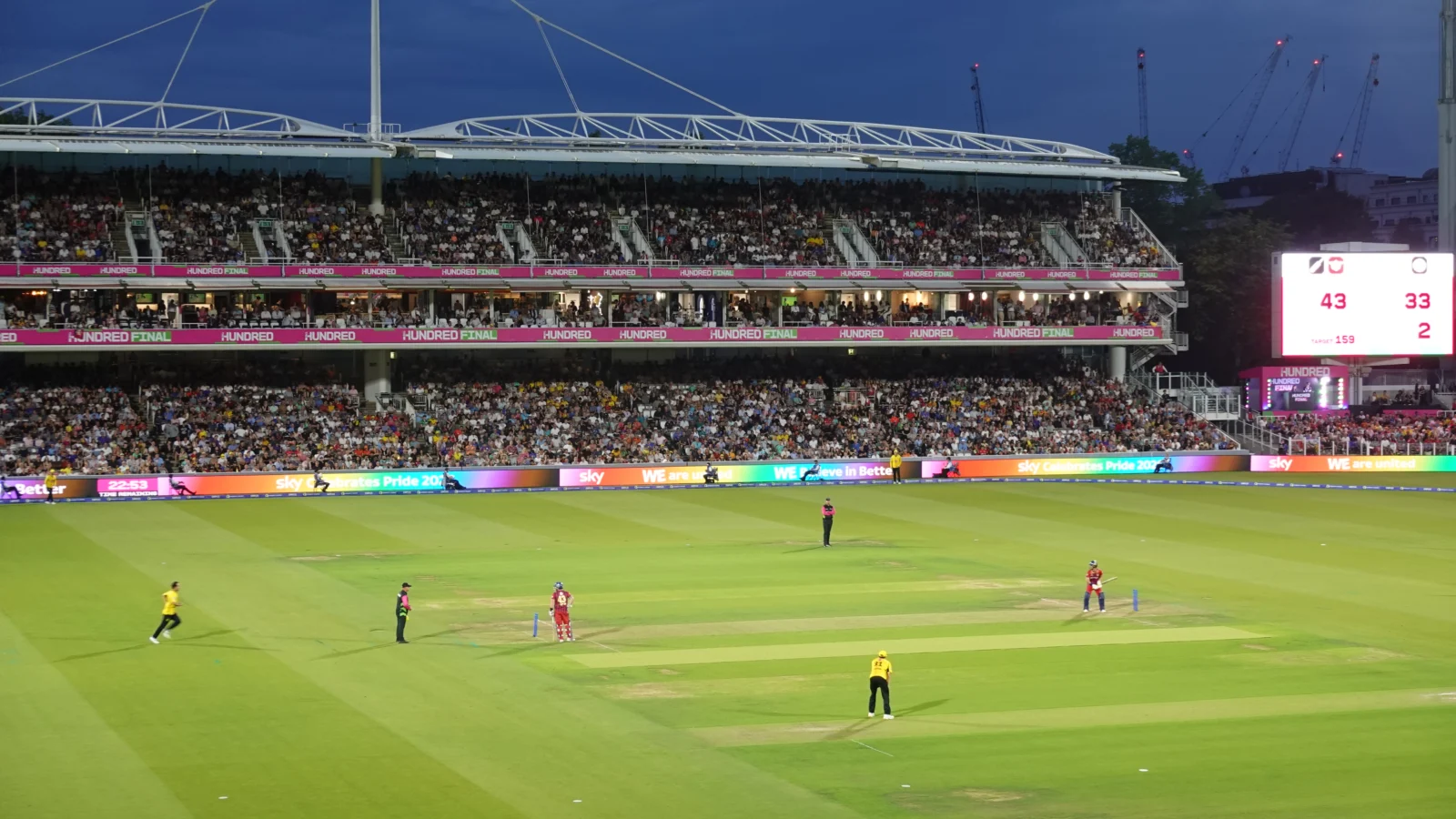
The Hundred 2027 will let every team carry five overseas players, one more than last summer, and squads can grow to 19. The playing XI limit stays at four overseas players, the level first allowed in 2026. The change gives franchises more freedom to recruit international stars. The harder question is what it means for the domestic players the competition is also meant to showcase.
What changes in The Hundred 2027?
| Rule | 2026 | 2027 |
|---|---|---|
| Maximum squad size (men’s) | 18 | 19 |
| Maximum overseas players in squad | 4 | 5 |
| Maximum overseas players in playing XI | 4 | 4 |
The fifth overseas place is optional. The Hundred squad rules otherwise follow last year’s pattern: teams can retain up to 16 players until 15 January 2027, make up to four direct signings (no more than two from overseas) between 20 January and 3 February, then complete their squads at an auction in early March.
Some announcements described the XI limit as rising from three to four for 2027, but that increase came a year earlier, after five seasons at three. In the 2026 men’s final at Lord’s, Manchester Super Giants fielded four overseas players: Tim Seifert, Heinrich Klaasen, Michael Bracewell and Noor Ahmad.
Why franchises want a fifth overseas player
Availability, more than star power, drove the change. In 2026, several sides went into matches with only three overseas players because of injury, international duty or poor form. MI London signed Josh Philippe on a one-match deal while Sherfane Rutherford was away with West Indies. A spare overseas player in the squad means The Hundred overseas players who drop out mid-season can be covered from within, rather than through short-term replacements.
There is a recruitment benefit too. Faf du Plessis, Shadab Khan and Daryl Mitchell all missed out at the 2026 auction; an extra slot gives players like them a better chance, subject to their international commitments.
What it could mean for English cricket talent
On paper, the squeeze is smaller than the headline number suggests. By Sporting Narrative’s calculation, a full 18-player men’s squad with four overseas players in 2026 had at least 14 domestic players. A full 19-player squad with five overseas players in 2027 also has at least 14. In the XI, at least seven places still go to domestic players, exactly as in 2026.
The pressure is more subtle. A 16-player squad that fills all five overseas places would carry 11 domestic players instead of 12. And one stated purpose of the extra place is cover for loss of form: when an overseas player struggles, the first call may now go to another overseas player rather than a young English one. How coaches use that fifth player will decide how much English cricket talent is affected.
The counter-argument is that young players learn from sharing dressing rooms with overseas stars, a point England all-rounder Jamie Overton made in 2025.
The impact on the women’s competition
The extra place is open to every Hundred team, so it should cover the women’s squads too, which had 15 players each in 2026, although the full 2027 regulations have not yet been published. The women’s tournament already relies heavily on international players: Smriti Mandhana, Meg Lanning, Ellyse Perry and Melie Kerr were among the 2026 overseas cohort. The 2027 calendar is helpful, with England Women’s Ashes series ending on 20 July and their next series starting on 8 September.
Money is the constraint. Women’s squads had a salary cap of £880,000 in 2026, against £2.05 million for men’s squads, and both are expected to stay at similar levels. A fifth overseas contract takes a bigger share of a smaller pot, so women’s teams may use the extra place more sparingly.
Global showcase or domestic pathway?
The Hundred is trying to be both a franchise competition that attracts the world’s best players and a stage for England’s next generation. The 2027 change leans towards the first, but only slightly, because the domestic floor in the XI is unchanged. The real test comes at the March auction and on August team sheets. If the fifth overseas player stays on the bench as insurance, little changes. If teams pick overseas cover ahead of homegrown players, the debate will sharpen quickly.

Join the conversation
0 comments