

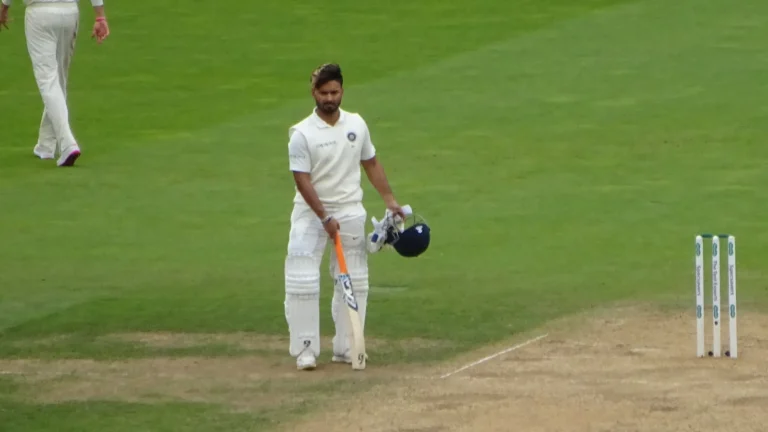
India named Rishabh Pant in their 16-man squad for the two-Test series in New Zealand on 16 October, subject to fitness clearance. He sustained a left-side strain in the Irani Cup in early October, missed India A’s first two four-day matches in New Zealand, and was reported on 2 November to have failed a fitness assessment at the BCCI Centre of Excellence in Bengaluru, with another due before the team leaves. The first Test starts in Wellington on 19 November.
The fitness process will run its course. The more useful question is what India would be missing. Away from home, Pant has scored 2,534 Test runs in 36 matches at an average of 41.54, with six hundreds. MS Dhoni, the previous record holder among India wicketkeepers, made 2,496 in 48 overseas Tests at 32.84, with one hundred. The gap is not only in the totals. It shows a change in what India now ask of the player who keeps wicket.
How the record was set, and the correct numbers
Pant passed Dhoni on 24 August 2026, the second day of the second Test against Sri Lanka at the SSC in Colombo. He had retired hurt on the first day after being struck on the left wrist on 3 off 15 balls, returned on day two and made 63 off 89 balls, sharing a stand of 112 off 152 balls with Dhruv Jurel.
Some early figures quoted 2,501 runs at 41.68. That was his total at the moment he passed Dhoni, mid-innings. When he was dismissed, the figure stood at 2,534 runs at 41.54 with a strike rate of 69.23, and that is the record as it stands now: India have played no Test away from home since.
Pant overseas, country by country
| Host country | Tests | Inns | Runs | Avg | SR | 100s | 50s | HS |
|---|---|---|---|---|---|---|---|---|
| England | 13 | 24 | 1,035 | 43.12 | 71.13 | 4 | 5 | 146 |
| Australia | 12 | 21 | 879 | 46.26 | 67.77 | 1 | 3 | 159* |
| South Africa | 3 | 6 | 186 | 37.20 | 65.95 | 1 | 0 | 100* |
| Sri Lanka | 2 | 3 | 168 | 56.00 | 76.36 | 0 | 2 | 66 |
| Bangladesh | 2 | 3 | 148 | 49.33 | 91.35 | 0 | 1 | 93 |
| New Zealand | 2 | 4 | 60 | 15.00 | 49.18 | 0 | 0 | 25 |
| West Indies | 2 | 3 | 58 | 19.33 | 47.54 | 0 | 0 | 27 |
| Total | 36 | 64 | 2,534 | 41.54 | 69.23 | 6 | 11 | 159* |
Three things stand out. First, the bulk of the record was built in the hardest places to bat for an India side: 1,914 runs and five of his six overseas hundreds came in England and Australia. Second, he keeps scoring at close to 70 runs per 100 balls even in England and Australia. Third, the weak spots are small samples: two Tests in the West Indies in 2019 and two in New Zealand in early 2020, when he made 60 runs in four innings.
That last point matters this month. New Zealand is one of two countries, with the West Indies, where his overseas method has not yet produced runs, and his only Test experience there is now almost seven years old.
Pant and Dhoni: same gloves, different brief
| Overseas Tests | Pant | Dhoni |
|---|---|---|
| Tests | 36 | 48 |
| Runs | 2,534 | 2,496 |
| Average | 41.54 | 32.84 |
| Strike rate | 69.23 | 58.69 |
| Hundreds / fifties | 6 / 11 | 1 / 18 |
| In SENA countries: Tests, runs, average | 30, 2,160, 41.54 | 32, 1,731, 31.47 |
| Hundreds in SENA countries | 6 | 0 |
This is not a verdict on who was better. Dhoni captained India in 60 of his 90 Tests and batted at No. 7 in most of them, behind a top order that for much of his career included Sachin Tendulkar, Rahul Dravid and VVS Laxman. He remains India’s most successful Test wicketkeeper, with 294 dismissals.
Pant’s role has been different. Across his career he has batted mostly at No. 5 and No. 6, and up to July 2025 he averaged 59.03 in 22 Tests at No. 5. India now pick him as one of their top six batters who also keeps wicket, rather than as a wicketkeeper who adds runs. The overseas numbers show that the arrangement works. Pant was the first India wicketkeeper to score Test hundreds in England, Australia and South Africa, and no other India keeper has made a Test hundred in a SENA country.
Five innings that show the pattern
| Test | Position when Pant came in | Pant | What happened around him | Result |
|---|---|---|---|---|
| Sydney, Jan 2021 | Fourth innings, chasing 407; India resumed on 98 for 2 and lost Ajinkya Rahane in the second over | 97 (118 balls) | 148-run stand with Cheteshwar Pujara (77 off 205) | Drawn |
| Brisbane, Jan 2021 | Fourth innings, chasing 328; came in at 167 for 3 | 89* (138 balls) | Scored his last 55 runs off 54 balls after Pujara’s dismissal | Won by three wickets |
| Cape Town, Jan 2022 | Third innings, 58 for 4 | 100* (139 balls) | The other ten batters made 70 runs off 275 balls; India all out 198 | Lost; South Africa chased 212 |
| Birmingham, Jul 2022 | First innings, 71 for 4; 98 for 5 when Ravindra Jadeja joined him | 146 (111 balls) | 222-run sixth-wicket stand off 239 balls; India made 416 | Lost; England chased 378 |
| Galle, Aug 2026 | Third innings, 81 for 3; 120 for 5 soon after | 66 (69 balls) | Scored 66 of the 93 runs added while he batted; India all out 193 | Won by 165 runs |
The pattern is not that Pant wins every match. Two of these five ended in defeat. The pattern is that he changes the pace of an innings at the moment India are most likely to slip into a long defensive passage. At Edgbaston the stand with Jadeja came at more than 5.5 runs an over. In Cape Town his 100 was more than half of India’s total. At Galle his 66 came at almost a run a ball while two partners fell between 81 and 120.
In our reading, that has two effects that a scorecard captures only partly. It moves the game forward, which gives India’s bowlers more time to take 20 wickets. And it pushes the fielding captain towards defence. In Sydney the stand with Pujara took India to 206 for 3 at lunch on the final day, before Hanuma Vihari and R Ashwin batted out the draw; at Brisbane he finished the chase himself.
The same method has a cost, and the record should show it. At the MCG in December 2024 Pant was out for 28 attempting a scoop off Scott Boland with two fielders waiting in the deep, a stroke Sunil Gavaskar called a terrible selection at that stage of the match. That series was his least productive in Australia: 255 runs in nine innings at 28.33, after 624 runs in seven Tests on his first two tours there. The overseas average of 41.54 contains both kinds of innings.
What his absence would mean for India’s batting
India’s structure in Sri Lanka in August showed how much depends on Pant. He batted at No. 5 in both Tests, with Jurel playing as a specialist batter at No. 6 or No. 7 and making 51 and 115 not out in the two first innings. Jurel is also in the New Zealand squad as the second wicketkeeper.
If Pant is not cleared, India lose more than a set of gloves. They lose a top-five batter whose overseas average is above 40 and whose scoring rate is the highest of any India keeper away from home, and they must decide how to rebalance the middle order around that gap. How they do it is a selection matter. The size of the gap is a matter of record.
What comes next
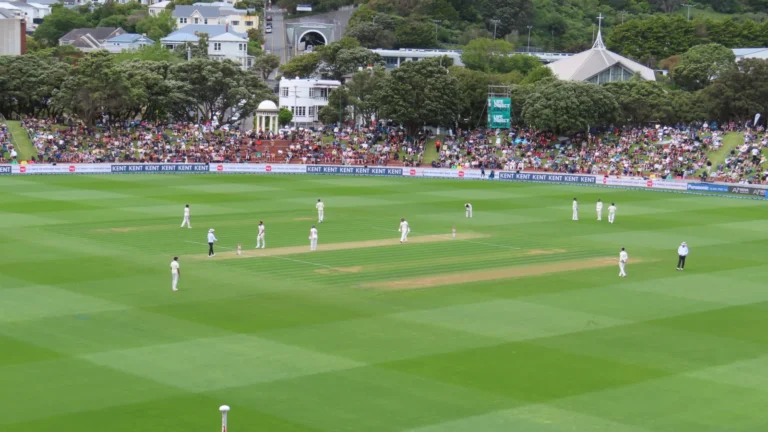
Pant’s availability depends on the BCCI medical team’s next assessment. The series is important for India, who are fourth in the World Test Championship table on 51.52%. The first Test is at the Basin Reserve in Wellington from 19 November, and the second at Hagley Oval in Christchurch from 27 November.
If he plays, New Zealand offers him something his overseas record still lacks: a body of runs in that country. If he does not, India will find out how much of their recent overseas batting method has been built around one player.


Join the conversation
0 comments