

Tilak Varma has scored 2,142 runs in 52 List A matches at an average of 47.60, with six hundreds. For India in ODIs, he has faced 119 balls. That gap, between a substantial record in 50-over cricket and an international sample smaller than one long innings, is what makes the next three weeks matter.
He is in India’s squad for the fourth and fifth ODIs against New Zealand at Mount Maunganui on 13 and 15 November. Four days after the fifth match, he will captain India A at the ACC Men’s Rising Stars Asia Cup in Doha, which is being played as a 50-over tournament this year. The question is not whether Tilak can bat through 50-over cricket. It is whether India have seen him in the job they would actually give him.
What his 50-over record already shows
| Format | Matches | Innings | Not outs | Runs | Highest | Average | Strike rate | 100s | 50s |
|---|---|---|---|---|---|---|---|---|---|
| List A | 52 | 50 | 5 | 2,142 | 156* | 47.60 | 87.96 | 6 | 14 |
| ODI | 5 | 4 | 1 | 68 | 52 | 22.67 | 57.14 | 0 | 1 |
Twenty of his 50 List A innings have reached 50, and six of those became hundreds, a conversion rate of 30%. The record is not built on one golden season either. In November 2022 he made 132 not out from 106 balls at No.3 against Himachal Pradesh, adding 223 for the second wicket. In the 2024-25 Vijay Hazare Trophy he made 99 from 106 balls as Hyderabad chased 322 against Karnataka, a target they reached with two balls to spare.
The most recent evidence is also the most relevant. Captaining Hyderabad in January 2026, he scored 109 from 118 balls against Chandigarh. In June, leading India A in a three-team series in Sri Lanka, he was his side’s top run-scorer with 275 runs, finishing with 67 from 90 balls in the final as India A made 377 for 9 and beat Sri Lanka A by 66 runs.
Five ODIs, 119 balls: what the scorecards show
| Date | Opponent and venue | No. | Score (balls) | Situation when he came in | Dismissal | Result |
|---|---|---|---|---|---|---|
| 15 Sep 2023 | Bangladesh, Colombo | 3 | 5 (9) | 2 for 1 in the first over, chasing 266 | b Tanzim Hasan Sakib | Lost by 6 runs |
| 17 Dec 2023 | South Africa, Johannesburg | 4 | 1* (3) | 111 for 2, chasing 117 | Not out | Won by 8 wickets |
| 19 Dec 2023 | South Africa, Gqeberha | 3 | 10 (30) | 4 for 1 in the first over | c Beuran Hendricks b Burger | Lost by 8 wickets |
| 21 Dec 2023 | South Africa, Paarl | 5 | 52 (77) | 101 for 3 in the 19th over | c Mulder b Maharaj | Won by 78 runs |
| 6 Dec 2025 | South Africa, Visakhapatnam | – | Did not bat | India reached 271 for 1 | – | Won by 9 wickets |
Read across the row and the pattern is clear. Twice he walked out in the first over, which in a 50-over game is a new-ball job in all but name. Once he faced three balls as India finished a chase of 117. In his fifth match, India won so comfortably that he never batted.
Only at Paarl did he arrive in the middle overs with time to build, and that is the innings that produced his fifty. He was 24 at the drinks break after 33 overs, alongside Sanju Samson, then added 28 more before he holed out to deep square leg trying to slog-sweep Keshav Maharaj in the 42nd over. The stand was worth 116 and India won by 78 runs.
None of this proves he is a natural No.5. Four innings cannot prove anything. What it does show is that India have seen him in the middle-overs role they are most likely to need only once.
Where he has batted
His domestic role has moved up and down the order. His highest List A score, 156 not out against Tripura in February 2021, came as an opener. The 132 not out against Himachal Pradesh came at No.3. For India he has batted at No.3 twice (15 runs from 39 balls), No.4 once (1 not out) and No.5 once (52 from 77).
A full position-by-position breakdown of all 50 List A innings would be the best evidence of where he is most effective over 50 overs. We could not verify one from accessible statistical sources, so we have not estimated it. The innings we could check suggest a batter who has spent much of his domestic career in the top three, while India’s vacancies are lower down.
The competition for middle-order places
| Player | ODIs | Innings | Runs | Average | Strike rate | 100s | In squad for 4th and 5th ODIs? |
|---|---|---|---|---|---|---|---|
| Shreyas Iyer | 83 | 77 | 3,151 | 45.01 | 97.92 | 5 | Yes, captain |
| Ishan Kishan | 32 | 28 | 1,107 | 42.58 | 107.06 | 3 (one double) | Yes, vice-captain and wicketkeeper |
| Ruturaj Gaikwad | 12 | 11 | 329 | 36.56 | 86.81 | 1 | Yes |
| Naman Dhir | 4 | 2 | 35 | 35.00 | 145.84 | 0 | Yes |
| Tilak Varma | 5 | 4 | 68 | 22.67 | 57.14 | 0 | Yes |
| Rinku Singh | 2 | 2 | 55 | 27.50 | 134.15 | 0 | No; playing for India A |
In the first ODI in Auckland on 4 November, India batted Rohit Sharma, Shubman Gill, Virat Kohli and Iyer in the top four, with Axar Patel at No.5, KL Rahul at No.6 and Dhir at No.7, and won by five wickets on DLS. Gill and Rahul are not in the squad for the last two matches, with Iyer captain and Kishan keeping wicket, so at least two batting places change.
Our reading is that Tilak’s most likely opening is at No.4 or No.5, depending on whether India move Iyer or Kishan to accommodate the changes. That is an inference from the squad, not a stated team plan. Gaikwad, who did not play in Auckland, is the obvious alternative, and Dhir has kept his place at No.7.
Mount Maunganui, then Doha
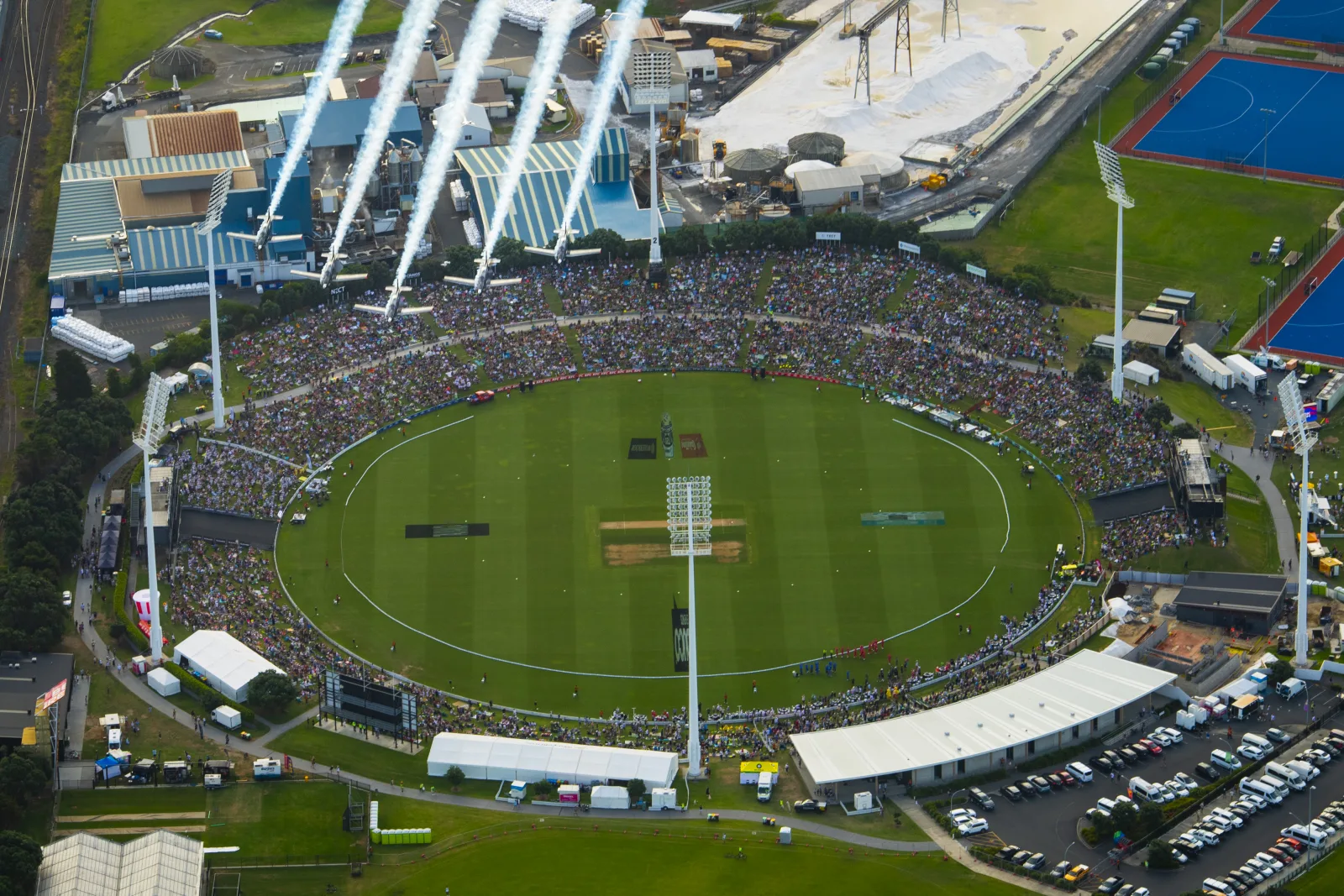
The ODIs (confirmed): the fourth and fifth matches of the series, on 13 and 15 November at Mount Maunganui.
The red-ball report (not confirmed): several outlets have reported that selectors want Tilak to play India A’s third unofficial Test against New Zealand A in Lincoln from 7 to 10 November, to give him red-ball practice before the ODIs. As of 4 November no squad update had confirmed it.
The captaincy (confirmed): India A’s squad for the Rising Stars Asia Cup in Doha from 19 to 29 November names Tilak as captain and Rajat Patidar as vice-captain, with Abhishek Sharma, Vaibhav Sooryavanshi and Rinku Singh among the batters. India A are in Group B and play Nepal on 20 November, Pakistan A on 22 November and the UAE on 24 November, with the semi-finals on 26 and 27 November and the final on 29 November. The 2025 edition was played as a T20 competition; this year’s switch to 50 overs is what makes it relevant to his ODI case.
It will be his third 50-over captaincy for India A in a year, after the List A series against South Africa A in November 2025, which India A won 2-1, and the June tri-series in Sri Lanka.
What India should be watching
- Entry point. Whether he bats at No.4 or No.5 and arrives after the first powerplay, the situation he has faced only once in ODIs.
- Tempo through the middle overs. His ODI strike rate of 57.14 sits well below his List A figure of 87.96, but it comes from 119 balls, many of them faced early in the innings against the new ball. Two innings in New Zealand will add context, not a verdict.
- Conversion. Six hundreds from 20 scores above 50 in List A cricket is a solid return. Turning a start into a long innings is the clearest thing an ODI middle-order batter can show in a short window.
- Leadership with the bat. In Doha he is captain in a squad full of attacking T20 batters. How he paces his own innings in that environment will say something about how he reads a 50-over game.
Two matches at Mount Maunganui will not settle Tilak Varma’s ODI future, and nor should four innings from 2023. What India can do over the next three weeks is see him in the right role, at the right stage of the innings, in the format they will take to the 2027 World Cup. His List A record has already earned that look.


Join the conversation
0 comments