

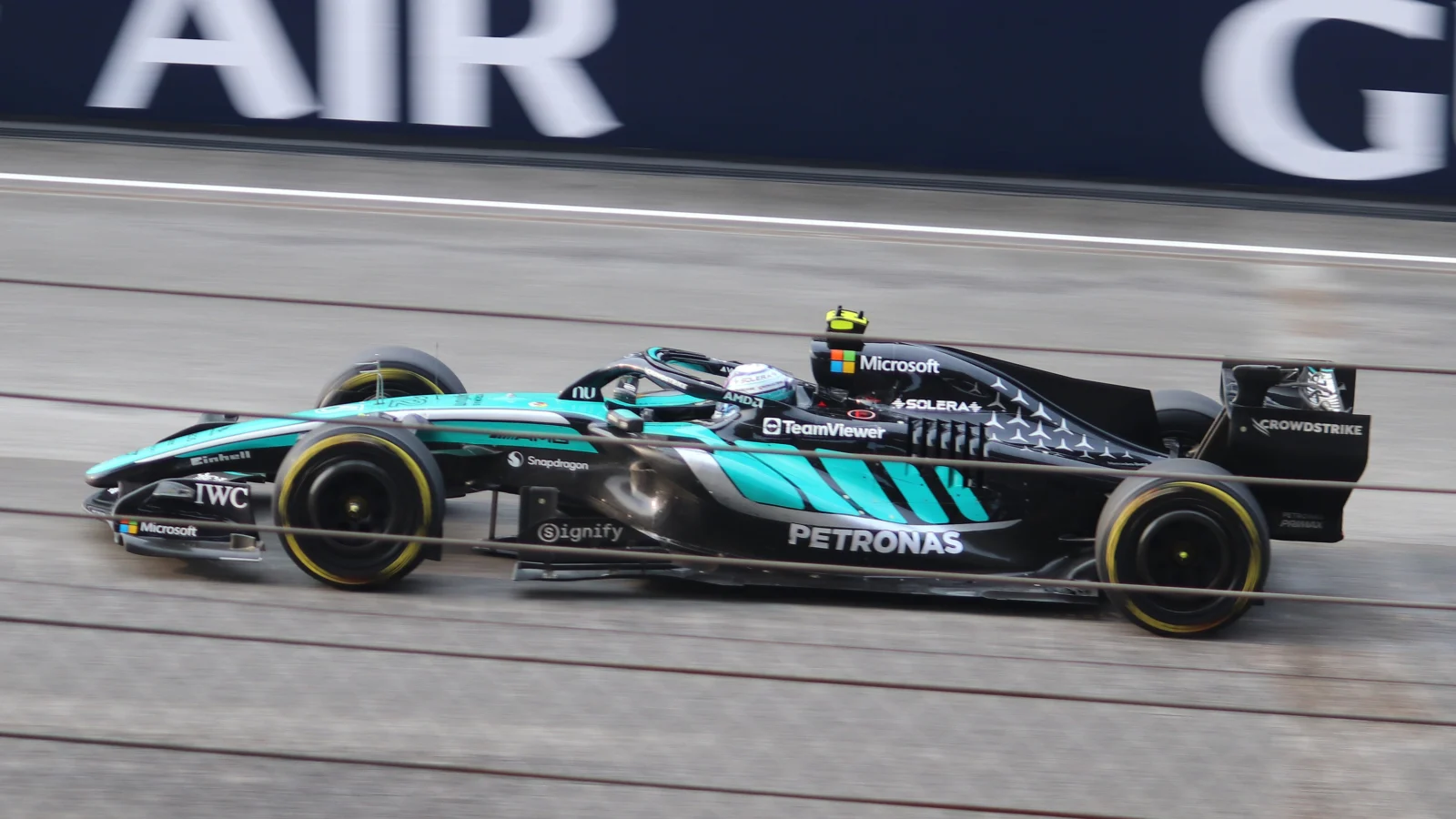
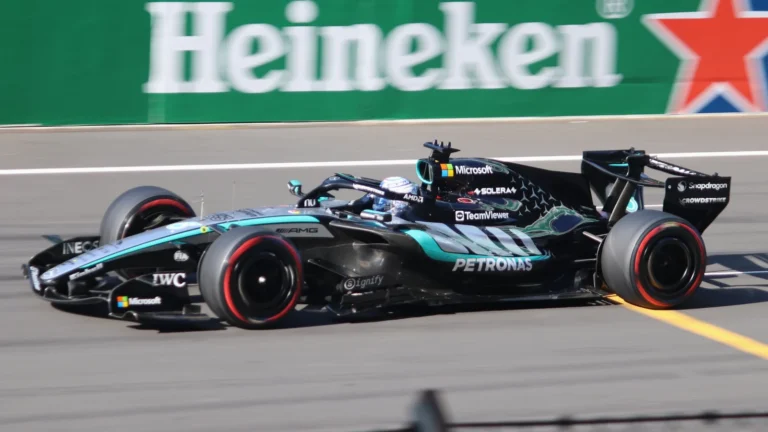
Mercedes say tyres running just below their ideal temperature, not a broken part, caused the strange handling that left George Russell and Kimi Antonelli fighting their cars at the 2026 Sao Paulo Grand Prix. The explanation for the Mercedes Brazilian GP problems came from deputy team principal Bradley Lord in the team’s post-race debrief, three days after a race in which Mercedes sealed the Constructors’ Championship but had no answer for the winner, Lando Norris.
A difficult afternoon at Interlagos
The race on 8 November was run in changeable, damp conditions. Antonelli, the newly crowned world champion, passed Norris at the start and led, but the afternoon soon unravelled. On lap 14 Russell spun at the pit-lane exit, and three laps later Antonelli spun at Turn 1 while leading. Both then struggled on intermediate tyres in the final stint.
Russell finished fourth and Antonelli fifth, the Mercedes F1 team’s first race of 2026 without a podium. Both drivers said the car felt as if something was broken, and team principal Toto Wolff initially suspected the team had got its tyre pressures or set-up wrong.
What caused the Mercedes Brazilian GP problems
Lord described “a really topsy-turvy race” and stressed that pace was not the issue in every phase. “There were periods of the race in Brazil: the first inter tyre at the start, and then during a large part of that dry soft tyre stint, that we actually were the fastest car on track,” he said.
The problem, he explained, was temperature: “It looked like we were just below the tyre temperature window. Sometimes popping into it, but then dropping back out of it in the damp conditions, and that’s what was causing the very strange and unusual car behaviour.”
Mercedes have not described the issue as a mechanical failure.
Why tyre temperature changes everything
F1 tyres only give their best grip within a narrow temperature range. Below it, the rubber grips less and responds less predictably. On a damp, drying track the temperature keeps moving: wet patches cool the tyres, drier sections warm them. A car sitting right on the edge of the window can therefore switch between grip and sliding from one corner to the next. Lord said the W17 became very oversteery, meaning the rear stepped out, which explains why drivers interpreted it as a fault.
Mercedes were not alone. Ferrari’s Fred Vasseur also blamed tyre temperature for his team’s inconsistent pace at Interlagos.
Antonelli’s extra problem
Lord added that Antonelli’s spin left flat spots on all four tyres. A flat spot is a worn patch caused by a tyre sliding without rotating, and it creates vibration and reduces grip, which further limited his pace.
What it means for the final races
The titles are settled, but three races remain: Las Vegas on 22 November, Qatar on 29 November and Abu Dhabi on 6 December. With even colder conditions to come, Mercedes want answers before then. If the car’s working range is narrow in cool weather, finding it quickly will decide whether Mercedes can turn its outright speed into results before the season ends.

Join the conversation
0 comments