

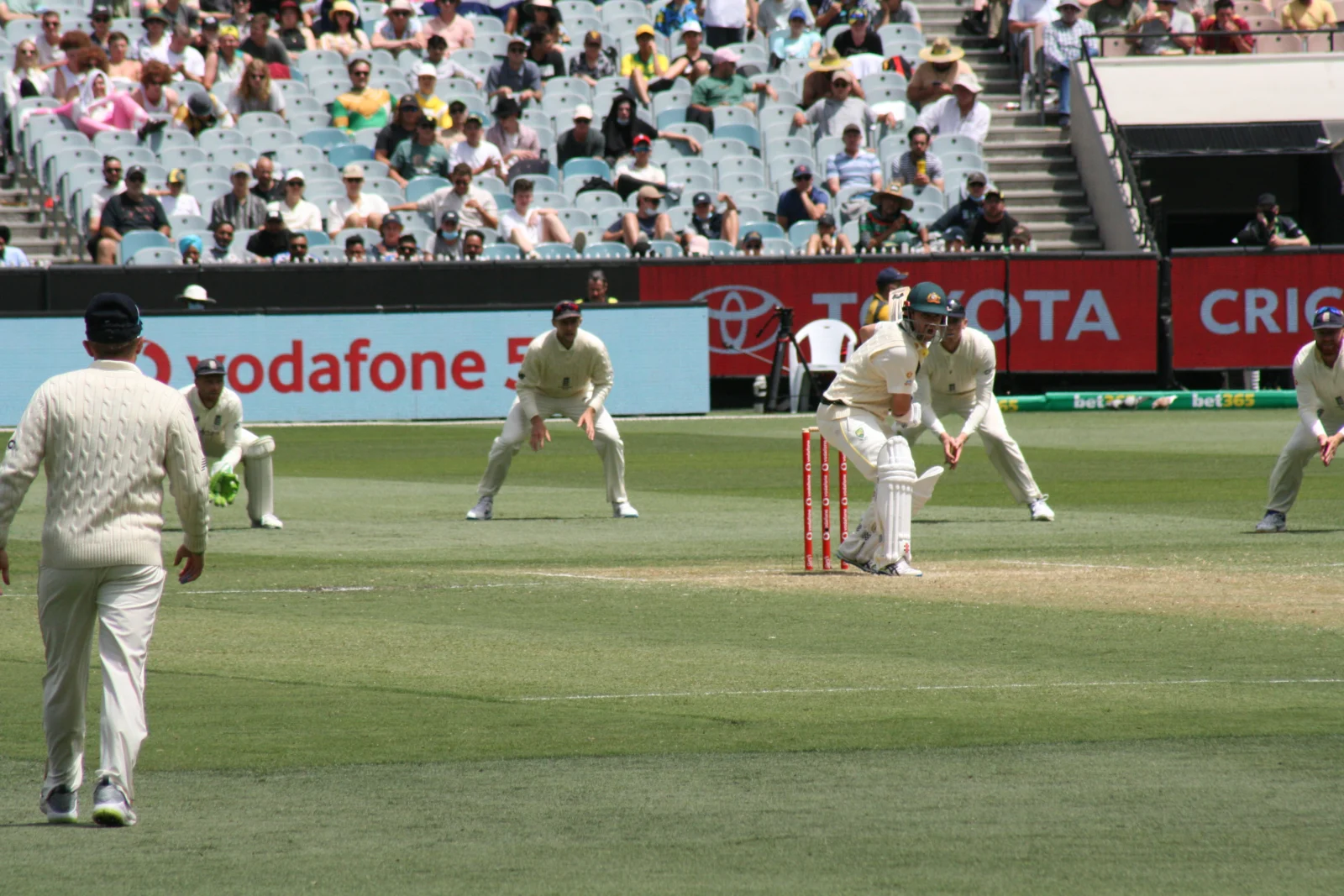
Australia’s Test batting has a starting problem. In 14 of their past 25 Test innings they have been four wickets down with 95 runs or fewer on the board, which is more than one innings in every two. The tour of South Africa, lost 2-1 after Australia had gone 1-0 up, added three more starts like that and cost them the No.1 Test ranking.
The top order can be repaired before New Zealand arrive in Perth on 9 December, but only if three questions are settled first: who opens, who bats at No.3, and whether Marnus Labuschagne stays in the side.
The first hour has become the problem
Four down for 95 or fewer is a measure of early damage. It does not mean Australia were bowled out cheaply every time; often the lower order dug them out. But a side that keeps asking Nos 6 to 11 to rebuild an innings is relying on its least specialist batters to do its hardest work.
Partnerships tell the same story. Between the start of 2024 and the Cape Town Test, Australia put together only 11 century stands in 24 Tests. Among World Test Championship sides, only West Indies managed fewer.
The South Africa series, innings by innings
| Test | Australia’s innings | Early position | What happened next |
|---|---|---|---|
| 1st, Durban | 390 | 6/124 | Matt Renshaw, batting at No.5, made 190; 266 runs added for the last four wickets |
| 1st, Durban | 314/6 dec | No collapse | Renshaw made 82 as Australia chased quick runs; won by 214 runs |
| 2nd, Gqeberha | 99 | All out in 42.3 overs | Marco Jansen took 5 for 33; Australia followed on |
| 2nd, Gqeberha | 295 | Follow-on | Travis Head made 121; lost by an innings and 31 runs |
| 3rd, Cape Town | 429 | No collapse | Inglis 102, Carey 80, Renshaw 74, Green 65; last six wickets fell for 99 |
| 3rd, Cape Town | 111 | 6/42 after 18 overs | Chasing 288; Simon Harmer took 6 for 16; lost by 176 runs |
Three of the six innings started in collapse. The 390 in Durban, which set up the only win, was built from 6 for 124 by Renshaw and the tail. In Gqeberha, Australia lost 19 wickets in the last two days and were bowled out twice to lose a Test for the first time since Karachi in 1988. Only once, in the first innings at Newlands, did the top half of the order build the total itself, and that came after a reshuffle that moved Renshaw up to open and put Cameron Green at No.4.
Technique, tactics or selection?
Selection churn is the clearest pattern. Nic Maddinson was recalled to open after almost a decade without a Test, made 0, 48, 0 and 8, and went home before the decider. Australia then changed four players for Cape Town, their most mid-series changes since 2018. Renshaw batted at No.5 for two Tests and opened in the third. A top order that changes shape every match never gets the chance to form partnerships, and the partnership record above suggests that is exactly what has happened.
Labuschagne’s position adds to the uncertainty. He has now gone 49 Test innings without a century, the longest such run by an Australian top-four batter, and made 0 and 4 in Cape Town.
Tactics mattered too. In the first innings at Newlands, Australia largely left the pull shot alone, accumulated, and made 429. On the final day, chasing 288, they were 6 for 42 inside 18 overs. Pat Cummins said afterwards that some of his batters “got out facing single digit balls”. His decision to bowl first in Cape Town also left Australia batting last on a pitch turning sharply for Harmer.
Technique is the hardest case to make from the outside. Head dragged on in Cape Town and Labuschagne edged Harmer to slip, but individual dismissals do not prove a flaw across the order. That diagnosis needs ball-by-ball data rather than highlights.
The counter-argument deserves weight. Coach Andrew McDonald said Australia “walk away in a stronger position” with the bat. The bowlers also let South Africa recover from 6 for 110 in Gqeberha and from 4 for 140 in their second innings at Newlands, and Steve Smith’s neck injury disrupted the middle order in the last two Tests. South Africa were the better-organised side, and not every defeat traces back to the top order.
What Renshaw and Inglis showed
Renshaw was the series’ leading run-scorer, with 369 runs at 61.50. His 190 in Durban was his first Test century since January 2017, built on leaving the ball outside off stump and sweeping the spinners. He scored runs at No.5 and as an opener, which matters while the side is still deciding where he fits. Three Tests is a small sample, but it is the strongest evidence any Australian batter produced on tour.
Josh Inglis missed the first two Tests while recovering from a fracture and only played in Cape Town because Smith was injured. He made 102 and added 185 for the fifth wicket with Alex Carey. One innings is not a trend, but it came under series-deciding pressure.
The more useful point is where the runs came from. Neither player was part of the top four that started the series. The positives came from outside the core group, which strengthens the case for change over continuity.
How the order could be rebuilt
No squad has been named. The table sets out our assessment of each position after South Africa.
| Position | Where it stands | Our view |
|---|---|---|
| Openers | Head and Renshaw finished the series together | Keep them together for all four Tests; Sam Konstas (71 and 151 not out in the Shield in October) is next in line |
| No.3 | Unresolved | Needs a specialist: Smith if fit, otherwise a Shield top-order batter such as Kurtis Patterson, who made a century against Western Australia in October |
| No.4 | Green made 65 there in Cape Town | Leave him there |
| No.5 | Inglis made 102 there in Cape Town | Keep him if Smith moves to No.3 |
| No.6 | Cooper Connolly played his second Test in Cape Town | Too early to judge; give him a run |
| No.7 | Carey | Wicketkeeper at No.7 |
Everything turns on Smith. Cricket Australia expects him to be fully available for New Zealand after scans found an injury to a facet joint in his neck. If he is fit and Labuschagne is left out, Smith at No.3 keeps Green and Inglis at Nos 4 and 5. It is a neat answer, but it rests on a 37-year-old coming back from a neck injury, so the squad needs a fallback No.3.
What needs to change before Perth
Decide early and explain why. McDonald has said Labuschagne’s place will be reassessed. A squad named with a clear plan for Nos 1 to 3, and kept for the series, would end the reshuffling that undermined the tour.
Use the Sheffield Shield as the audition. The No.3 contenders should be batting long in red-ball cricket through November, so selectors are choosing on current first-class form.
Plan for continuity in a tight schedule. All four Tests against New Zealand fall within 31 days, from Perth (9 to 13 December) to Sydney (4 to 8 January), before a tour of India, as part of a run of 10 Tests in 14 weeks. There will be little time to fix a broken combination mid-series.
The first innings at Newlands showed what this top order can do when it is settled. The final day showed how quickly it falls apart when it is not. Perth will show which version the selectors have chosen to back.


Join the conversation
0 comments