

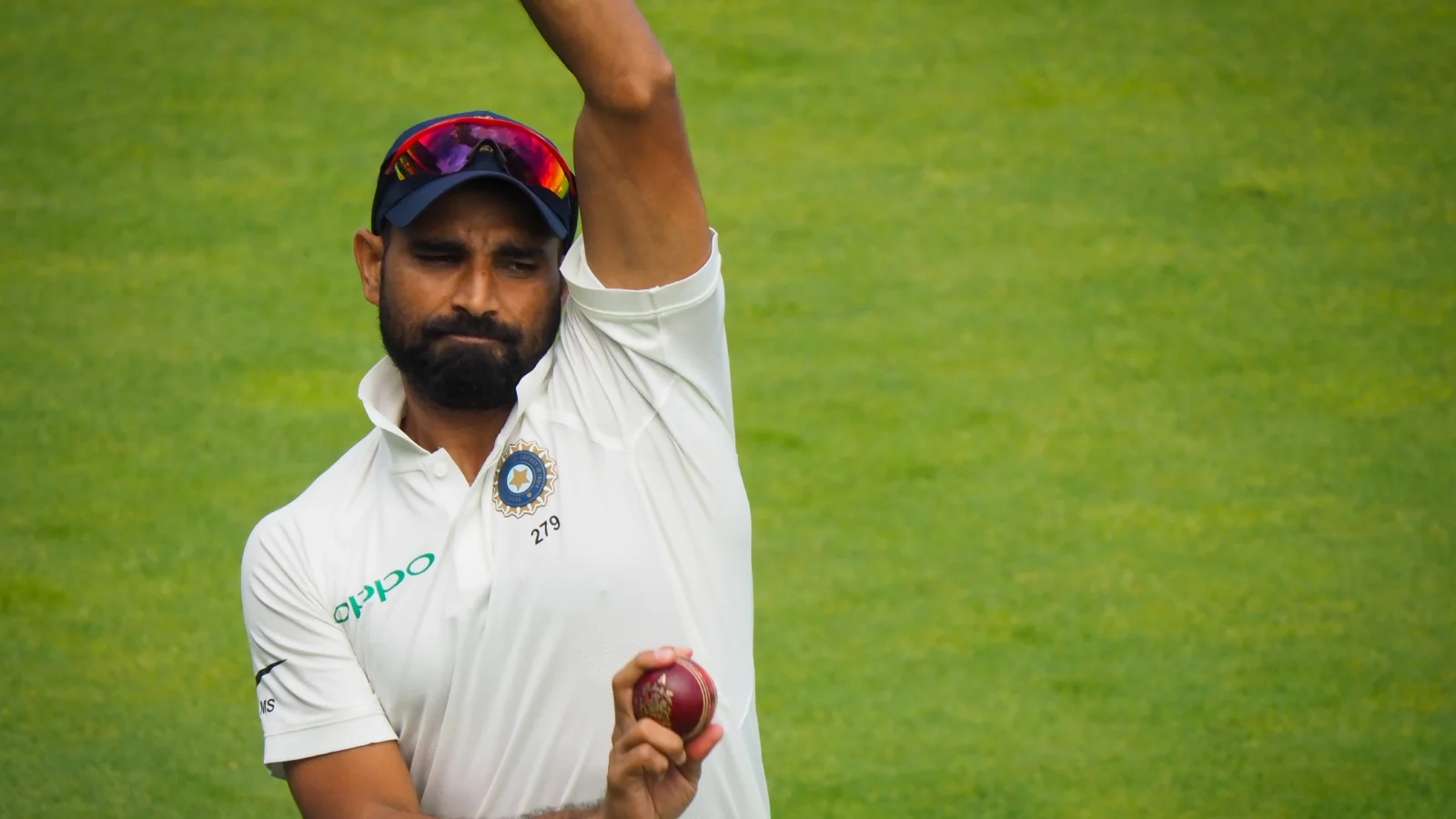
Mohammed Shami has retired from Test cricket. The India fast bowler announced his decision on social media on 6 November 2026, 13 years to the day after his Test debut against West Indies at Eden Gardens in Kolkata. He leaves the format with 229 wickets in 64 Tests at an average of 27.71. Among India’s fast bowlers, only Jasprit Bumrah has a better average or strike rate.
The 36-year-old has not played a Test since the World Test Championship final against Australia at The Oval in June 2023. He will carry on in white-ball cricket and said in a video message that he would keep playing in the IPL and in domestic cricket.
He wrote his farewell in Hindi. It opened with the line “Safed jersey se vida le raha hoon, lekin usse judi yaadon se kabhi nahi”: he was leaving the white jersey but never the memories that came with it. He thanked his teammates, coaches, family, the BCCI and the Cricket Association of Bengal, and signed off by thanking Test cricket.
For anyone following Mohd Shami news over the past three years, the decision does not come as a shock. It does close a door, though. India’s selectors no longer have the option of recalling a 229-wicket bowler for a tough away series.
Mohammed Shami’s Test record in numbers
| Measure | Figure |
|---|---|
| Tests | 64 |
| Wickets | 229 |
| Bowling average | 27.71 |
| Strike rate (balls per wicket) | 50.3 |
| Best innings | 6 for 56 |
| Best match | 9 for 118 |
| Five-wicket hauls | 6 |
| Four-wicket hauls | 12 |
He made an immediate impact on debut, with 4 for 71 and 5 for 47 against West Indies in November 2013. His figures over the next decade are those of a front-line strike bowler. He reached 200 Test wickets at Centurion in December 2021, the fifth Indian fast bowler to get there.
Where he ranks among India’s fast bowlers
Six Indian fast bowlers have taken 200 Test wickets. On the total, Shami is sixth. Rate statistics tell a different story.
| Bowler | Tests | Wickets | Average | Strike rate |
|---|---|---|---|---|
| Kapil Dev | 131 | 434 | 29.65 | 63.9 |
| Ishant Sharma | 105 | 311 | 32.41 | 61.6 |
| Zaheer Khan | 92 | 311 | 32.95 | 60.4 |
| Javagal Srinath | 67 | 236 | 30.49 | 64.0 |
| Jasprit Bumrah | 52 | 234 | 19.79 | 42.9 |
| Mohammed Shami | 64 | 229 | 27.71 | 50.3 |
Strike rate is the number of balls a bowler needs, on average, for each wicket. Shami took a wicket about every 50 balls, against roughly 60 to 64 for Kapil, Zaheer, Ishant and Srinath. Across a series, that is a meaningful difference. Bumrah is the only Indian quick to do better.
The breakdown of his hauls is unusual. Shami took only six five-wicket hauls but 12 four-wicket hauls. Bumrah, with a similar wicket tally, has 16 five-fors. In our analysis, Shami was mainly a bowler who struck in clusters inside a shared attack, breaking partnerships while others finished innings. That role helps win Tests even when it does not show up on an honours board.
The overseas record: South Africa, Australia and England
Shami played 43 of his 64 Tests outside India: 41 away Tests and two World Test Championship finals in England. That ratio shows how India used him. He averaged 22.10 at home, but his main job was to take wickets abroad.
| Where | Tests | Wickets | Average | Standout |
|---|---|---|---|---|
| South Africa | 8 | 35 | 23.22 | 5 for 28 at the Wanderers, January 2018 (India won by 63 runs); 5 for 44 and eight in the match at Centurion, December 2021 (India won by 113 runs) |
| Australia | 8 | 31 | 32.16 | Career-best 6 for 56 at Perth, December 2018; three second-innings wickets in the 31-run win at Adelaide |
| England | 14 | 42 | 40.50 | No five-wicket haul; 56 not out with the bat in the 151-run win at Lord’s, August 2021 |
| All away Tests | 41 | 145 | 30.33 | Two five-wicket hauls in South Africa, both in India wins |
South Africa was where he was at his best. At the Wanderers, South Africa were chasing 241 when he took 5 for 28. At Centurion, his eight wickets helped India to their first Test win at the ground.
Australia produced his best figures. On the 2018-19 tour he shared the second-innings wickets equally with Bumrah and Ravichandran Ashwin at Adelaide. In the next Test, at Perth, he took four wickets for 11 runs in five overs after lunch on the fourth day.
England was his toughest assignment, and his most famous day there came with the bat. At Lord’s he added an unbeaten 89 for the ninth wicket with Bumrah. India declared on 298 for 8, then bowled England out for 120.
The balanced verdict: Shami was central to India’s overseas improvement, but he was not equally effective in all conditions. In South Africa he averaged 23.22, better than his career average of 27.71. In England he averaged 40.50.
Injuries and the seasons Shami lost
Injuries ran through Shami’s whole career. He played the 2015 World Cup with left-knee pain and had surgery in June that year. In December 2020, in the first Test of the tour of Australia, a delivery from Pat Cummins broke his arm while he was batting, and he missed the rest of the series.
The injury that probably ended his Test career came after the 2023 ODI World Cup, where he took 24 wickets in seven matches. In February 2024 he had surgery for a heel injury, reported as Achilles-related. He came back for Bengal in November 2024 and bowled 43 overs against Madhya Pradesh in the Ranji Trophy. On 23 December 2024 the BCCI said his left knee had “exhibited minor swelling due to increased joint loading from his bowling workload” and ruled him out of the last two Tests of the Border-Gavaskar Trophy.
He was left out of the England Test tour in May 2025. Chief selector Ajit Agarkar said: “I don’t think his workload is where it needs to be.” In October 2025 Agarkar said, “if he was fit, he would have been on that plane. Unfortunately, he wasn’t.” Shami responded publicly that he had played the Champions Trophy, the IPL and the Duleep Trophy and was “in good touch”.
He kept bowling in domestic cricket, including 8 for 90 for Bengal against Jammu and Kashmir in February 2026. As late as March 2026 he said he was “not even thinking of retirement right now”. He was not recalled, and he was not in India’s squad for this month’s Tests in New Zealand. In all, 1,244 days passed between his last Test and his retirement.
What Shami’s retirement means for India’s pace attack
The immediate effect is small, because India have already spent more than three years without him. What changes is the safety net.
The 2024-25 tour of Australia showed the cost of not having one. Australia won the series 3-1. Bumrah took 32 wickets at 13.06 and bowled 53.2 overs in the Melbourne Test. He then had a back spasm in Sydney and could not bowl in Australia’s second innings. Mohammed Siraj took 20 wickets in support. In our reading, no third seamer offered the kind of control and wicket threat Shami had provided on India’s earlier tours.
The pace group named for New Zealand shows how steep the drop in experience is behind the first two:
| Bowler | Tests | Wickets | Average |
|---|---|---|---|
| Jasprit Bumrah | 52 | 234 | 19.79 |
| Mohammed Siraj | 48 | 144 | 29.63 |
| Akash Deep | 10 | 28 | 35.79 |
| Prasidh Krishna | 9 | 32 | 30.34 |
| Anshul Kamboj | 1 | 1 | 89.00 |
Bumrah and Siraj have 100 Tests between them. The other three specialist quicks have 20 Tests and 61 wickets combined. Bumrah and Siraj are both 32. Bumrah was withdrawn from India’s previous Test assignment, against Sri Lanka, before returning for this tour.
The opportunity for the next group
Shami’s retirement makes official what has been true in practice: the third seamer’s place belongs to the next generation. Each contender has a case, and each sample is small.
Akash Deep already has a 10-wicket match haul, but his career average is 35.79. Prasidh Krishna takes a wicket every 43.6 balls, a better strike rate than Shami’s, but he concedes 4.18 runs an over, which is expensive for Test cricket. Anshul Kamboj has played one Test. Nitish Kumar Reddy adds seam as an all-rounder rather than as a front-line bowler.
None of them has played enough Tests for a firm judgement; around five or six Tests is the minimum for reading form, and a career verdict needs far more. The role Shami filled, the bowler who takes four wickets abroad when the lead bowler is tired or being rested, is the one India most need to fill.
What to watch next
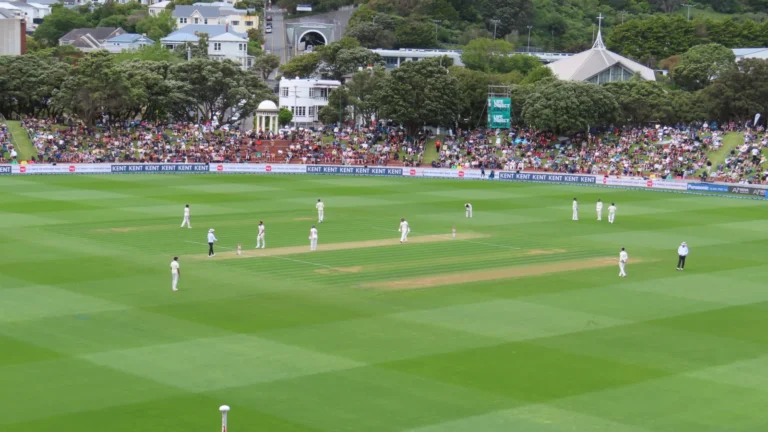
The two Tests in New Zealand, at Wellington from 19 November and Christchurch from 27 November, are the first meaningful test of this attack in seam-friendly conditions since Shami’s retirement became formal. The key question is not who replaces his wickets one for one. It is whether India can find a third seamer who lets them use Bumrah less, without becoming easier to score against. Shami was that bowler for much of the past decade.


Join the conversation
0 comments