

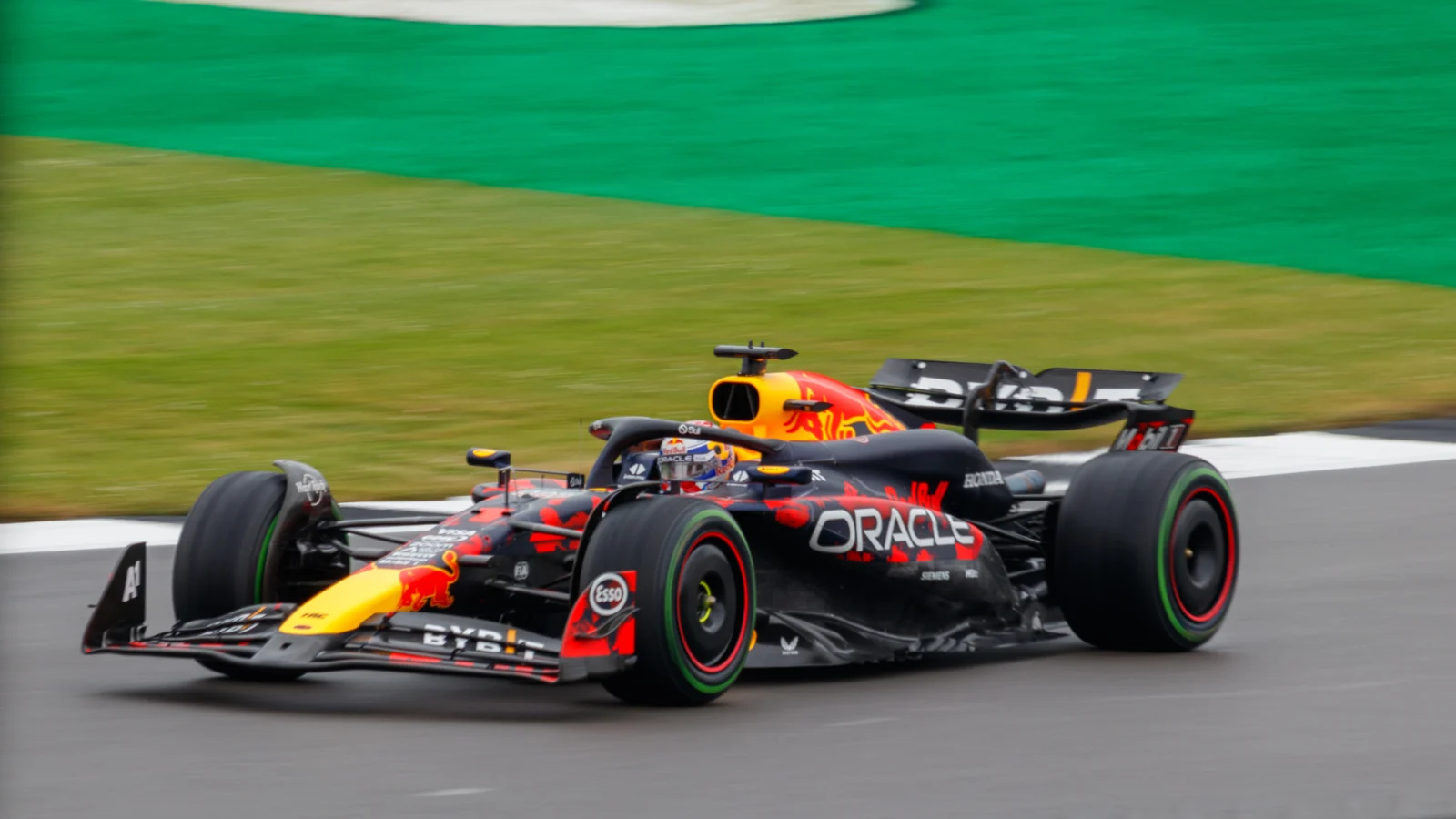
Lando Norris has warned that Formula 1’s wet-weather tyres could be at their weakest at the Las Vegas Grand Prix 2026. His concern is not that rain is certain, but that on a cold night circuit the tyres may never reach the temperature they need to grip. After the first properly wet weekend of the season in Brazil, the Lando Norris F1 wet weather tyres warning points to a problem the new cars have not solved.
The Lando Norris F1 wet weather tyres warning after Brazil
Norris won the São Paulo Grand Prix on 8 November. “I think the scary times are if you go to Vegas and you can’t get any tyre temperature,” he said, adding that drivers would need “a much better tyre than what we have here”.
Drivers describe a narrow operating window
Max Verstappen, second after starting 21st, said the working range of both the intermediate and the full wet was “a bit too small”, and that cold tyres felt “like a rock”. Carlos Sainz of Williams said the level of the F1 rain tyres was “not good enough”, citing heavy aquaplaning (a tyre riding on water rather than the track) and a lack of rear grip on the full wet. Racing Bulls driver Liam Lawson was blunter: “if we’re on a track like Vegas and it rains, honestly, I think we’re in trouble.”
Pirelli’s motorsport director, Dario Marrafuschi, maintains the tyres performed in line with expectations in Brazil.
Why Las Vegas is different
The 6.201km Strip Circuit is raced at night in late November, and the cold already makes tyre warm-up difficult there even in the dry. Its 1.9km run along the Strip and other full-throttle sections end in heavy braking zones rather than long, fast corners, leaving little sustained load to build tyre heat. When heavy rain hit qualifying there in 2025, cars aquaplaned off on intermediates and the whole field switched to full wets.
Do the 2026 cars make the problem harder?
Partly. The 2026 rules, including active aerodynamics, push heavy forces through the tyres, so Pirelli built a more robust intermediate and raised minimum pressures. A stiffer tyre at higher pressure moves less, and movement is what generates heat. The result is a tyre that copes with load but is slow to switch on.
There has been progress. Limits on energy deployment in low grip meant drivers were not overwhelmed by power at Interlagos, and the full wet was finally usable.
Can Pirelli wet tyres for 2027 fix it?
Pirelli has confirmed a new 2027 specification. “Some of the drivers were complaining about warm-up, so we have been working for next year on the warm-up phase, on the intermediates,” Marrafuschi said. Reports say October testing at Magny-Cours tried intermediates with different compounds, tread thicknesses and construction.
That work predates Brazil, and reports suggest the 2027 direction was set before the latest feedback, with FIA homologation due in December. The Interlagos complaints may confirm Pirelli’s priorities rather than reshape them. The new Pirelli wet tyres will only be judged once they meet a cold, wet track.
What it means for Formula 1 safety
This is not a crisis, but it is unfinished business. The 2026 cars have proved more manageable in the rain than many feared. The open question for Formula 1 safety is now the tyre: whether it reaches its window before a driver needs the grip. That is the core of the Lando Norris F1 wet weather tyres debate, and if Las Vegas stays dry, the answer waits until 2027.

Join the conversation
0 comments